
Listen
Review missed calls, recordings, web forms, storm periods, office hours, and common customer questions.
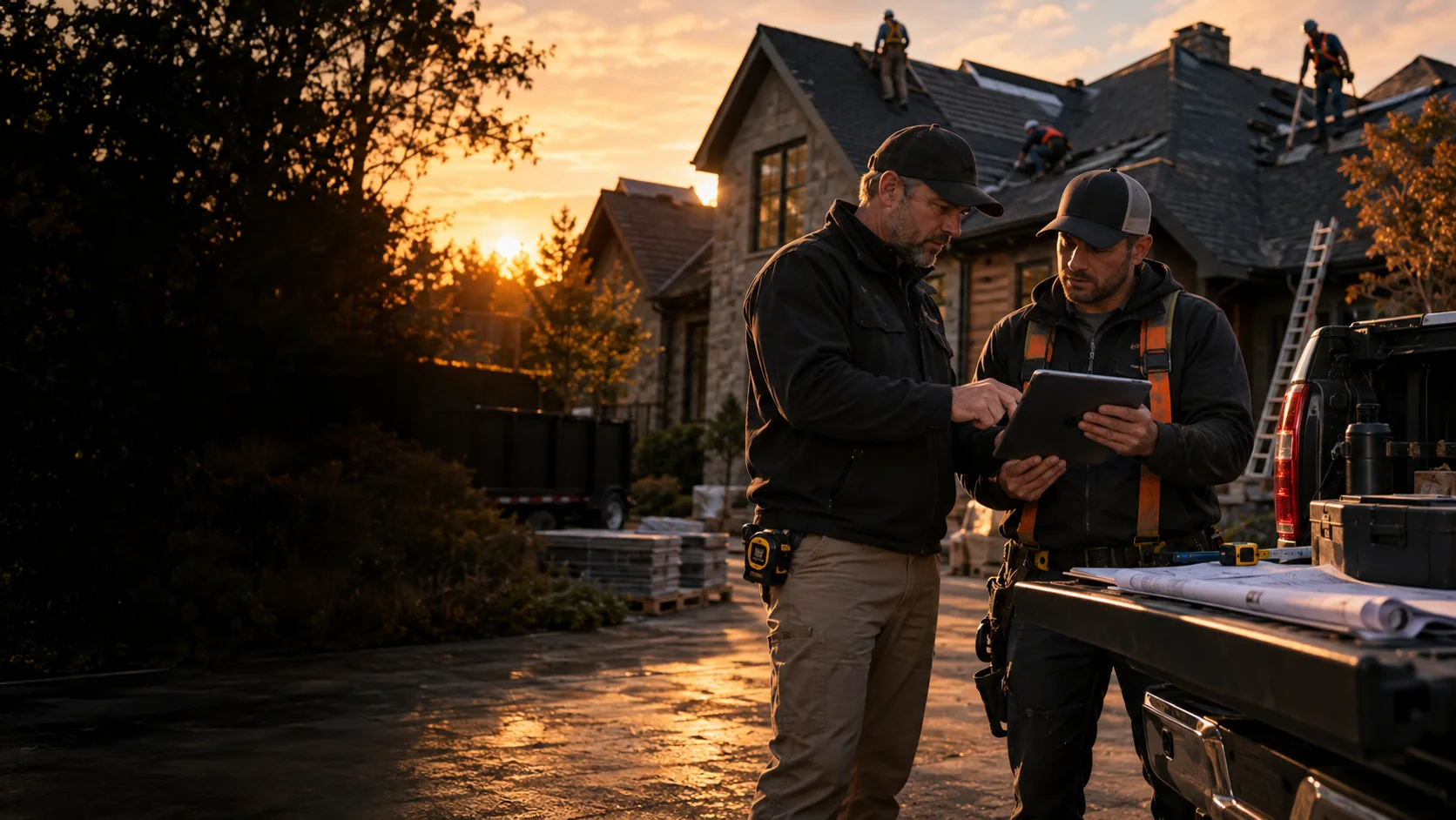
Answer, qualify, route, and book roofing inquiries before the homeowner moves on.
Roofing inquiries arrive while crews are working, estimators are driving, the office is handling production, and storm volume is changing by the hour. Voicemail and shared inboxes hide the delay. The system needs immediate acknowledgment, practical qualification, a named owner, and an inspection or callback path that matches capacity.
Leadership question
Who answers the homeowner, owns the inspection, and works the estimate until there is a decision?
Immediate business identification and acknowledgment
Active-leak and safety escalation rules
Service-area, property, and job-type qualification
Named callback or inspection ownership
Source and outcome visibility from inquiry to job
Review missed calls, recordings, web forms, storm periods, office hours, and common customer questions.
Approve urgent, standard, after-hours, out-of-area, and capacity-limited response routes.
Send complete lead data into one pipeline with an owner, due time, source, and next action.
Measure acknowledgment, human ownership, inspection scheduling, completion, estimates, and signed jobs.
Shadow response
“Thanks for calling [Roofing Company]. I can help get this to the right person. Is there an active leak or immediate safety concern?”
Homeowner
“We noticed damage after the storm and need someone to look at it.”
Shadow response
“I’ll collect the property address, the best contact information, and a few details about the damage. Then I can request the next available inspection or arrange a callback from the team.”
Human handoff
“Your request is assigned to [Name]. You will receive the inspection time and preparation details by text or email. If the weather changes, reply to that message and the office will help reschedule.”
Sample language only. Final scripts require company approval, compliance review, escalation rules, and staff training.
Record source, connected calls, missed calls, duration, and outcome.
Existing phone provider, Google Ads call reporting, or an approved call-tracking platform.
Own inspections, estimate stages, next actions, job value, and loss reasons.
Existing CRM first. JobNimbus or AccuLynx are examples to evaluate when a change is justified.
Pass complete inquiry details into one pipeline and trigger confirmations.
Website forms, calendar tools, and supported CRM forms or webhooks.
Connect source to qualified lead, inspection, signed job, installed job, and collected revenue.
CRM reports, spreadsheets, or a management dashboard built from supported exports.
• 100 monthly roofing inquiries
• 20 begin as missed calls
• 25% current lead-to-job close rate
• $12,000 average job value
20 missed calls × 25% close rate × $12,000 average job value = $60,000 in gross revenue exposure before any recovery assumption.
This is a planning example, not promised lost or recoverable revenue. Replace every input with phone, CRM, and sales records before making a budget decision.
How many roofing calls are missed by hour and day?
What percentage receives a useful acknowledgment?
How long until a named person owns the inquiry?
Which questions decide service-area and job fit?
What percentage of qualified inquiries schedule and complete an inspection?
Why: The homeowner has urgency and keeps calling contractors.
Fix: Acknowledge immediately, collect address and damage type, and create a named callback task.
Why: The homeowner forgets, the rep lacks context, or weather changes the schedule.
Fix: Send confirmation and reminders with rep, address, preparation, and reschedule instructions.
Why: Nobody recorded the decision question or the next contact date.
Fix: Use an estimate stage, decision reason, owner, and useful follow-up tied to scope, timing, insurance, or financing.
A serious engagement can involve intake design, automation, CRM ownership, call handling, website conversion, search demand, reputation, reporting, training, and ongoing improvement. The value is not the number of tasks. It is whether the system protects enough opportunity and creates enough operating clarity to justify the investment.
Your audit and strategy conversation should answer that question with your lead volume, customer value, current conversion, team capacity, and cost of delay. If the economics do not support the work, Shadow should say so.
See Pricing and FitClear questions deserve clear answers. If your situation is different, the revenue audit gives us the right place to start.
No. It covers predictable first steps, organizes the record, and routes situations that need staff judgment.
Yes. The company can approve storm-specific geography, hours, capacity, urgency, and overflow rules.
Shadow reviews the supported routing, fields, integrations, and exports before recommending a change.